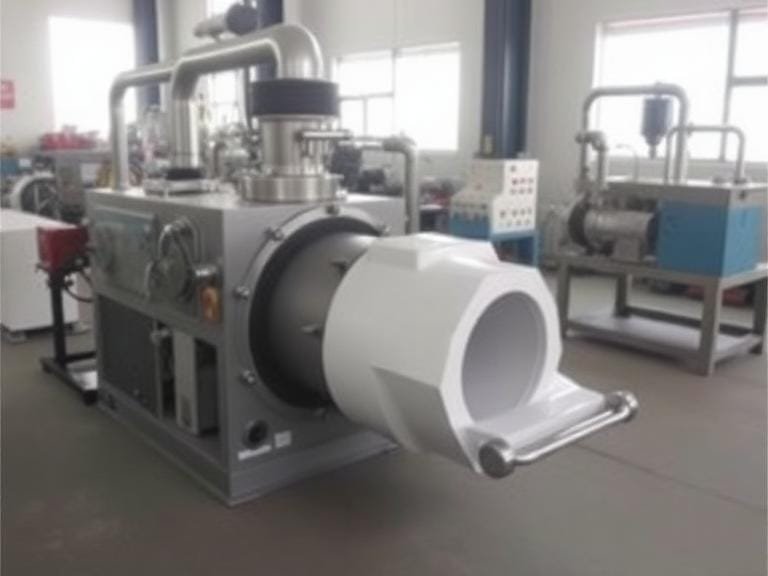
5 Best Conveyor Belt Magnetic Separators for Industrial Purity (2026 Review)
In the high-stakes world of industrial processing, “tramp iron” is more than just a nuisance; it is a financial disaster waiting to happen. Whether you are managing a ceramic production line in Foshan, a recycling plant in Germany, or an aggregate quarry in the United States, fugitive metal contaminants can shred conveyor belts, destroy cone crushers, and compromise product purity. The solution is the Conveyor Belt Magnetic Separator (often called an Overband Magnet or Cross Belt Separator).
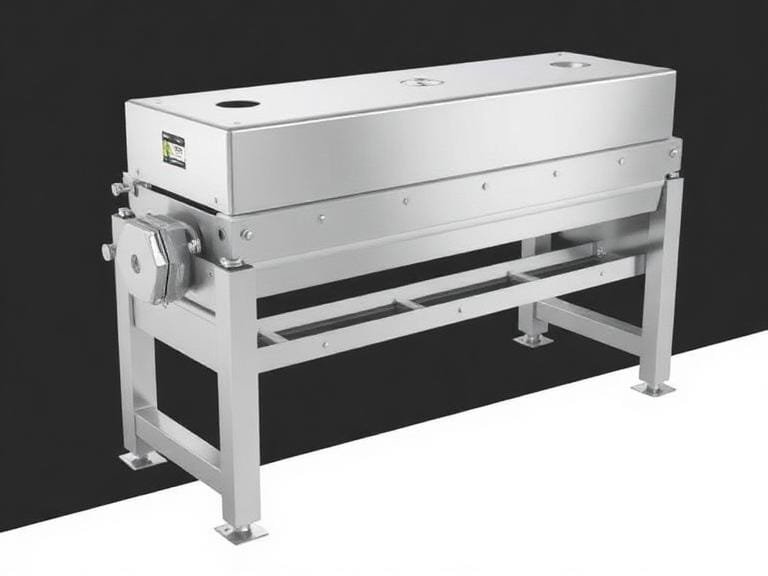
From our experience auditing production lines, the choice of separator is rarely straightforward. We often see facilities overspending on massive electromagnets when a high-efficiency permanent magnet would suffice, or conversely, installing underpowered units that miss deep-buried iron, leading to equipment failure. The market in 2026 has evolved, with Chinese manufacturing hubs offering competitive alternatives to traditional Western brands, prioritizing energy efficiency and rapid lead times.
This authoritative guide evaluates the 5 best magnetic separators currently available. We base these rankings on magnetic field strength (Gauss), power consumption, self-cleaning mechanisms, and overall build quality.
- 1. Critical Selection Criteria
- 2. Best Overall Efficiency: Oromineral ZT-1530P
- 3. Best Heavy Duty: Eriez CP Series 20/80
- 4. Best for Deep Burdens: Dings Electro-Overhead
- 5. Best for Recycling: Master Magnets Overband
- 6. Best Compact Solution: Kanetec Kyle Plate
- 7. Technical Buying Guide: Electro vs. Permanent
- 8. Summary Comparison Table
- 9. Frequently Asked Questions
- 10. References
1. Critical Selection Criteria
Before analyzing specific models, it is essential to understand the metrics that define a high-performance Conveyor Belt Magnetic Separator. We recommend focusing on three key areas:
- Suspension Height vs. Burden Depth: The magnet must be strong enough to pull iron from the very bottom of the material layer on the belt. A weak magnet will only clean the top layer.
- Self-Cleaning Mechanism: For continuous operations, a self-cleaning belt (which automatically discharges trapped metal) is non-negotiable. Manual cleaning requires downtime, which kills ROI.
- Power Consumption: With rising energy costs in 2026, the kilowatt (kw) rating of the motor (for permanent magnets) or the coil (for electromagnets) is a significant OpEx factor.
2. Best Overall Efficiency: Oromineral ZT-1530P

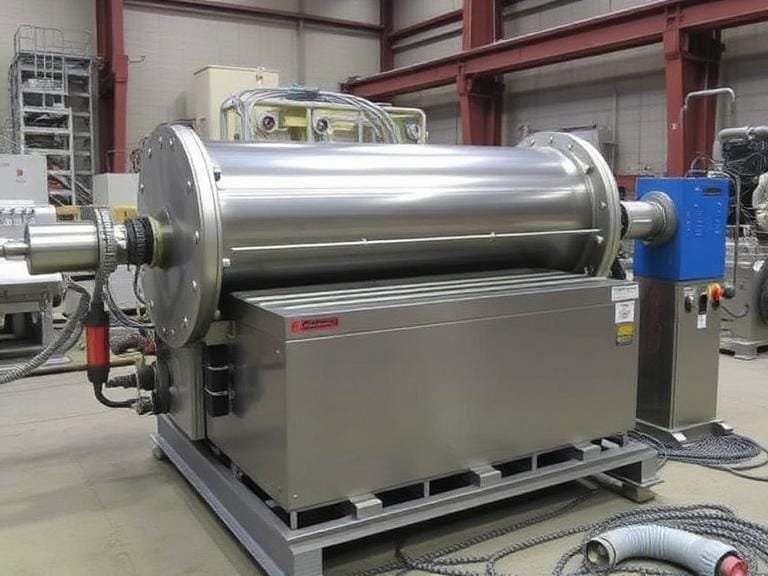
When balancing cost, lead time, and energy efficiency, the Oromineral ZT-1530P emerges as a standout performer for 2026. Manufactured in Foshan, Guangdong—a global hub for ceramic and mineral processing machinery—this unit is engineered for reliability without the bloat of excessive energy consumption.
The ZT-1530P utilizes a permanent magnetic core paired with a motorized self-cleaning belt. Unlike electromagnets that require constant massive current to generate a field, this unit only requires 1.1kw to drive the cleaning belt motor. This results in significant long-term energy savings.
Key Specifications:
- Power Rating: 1.1kw (Low Energy Consumption)
- Supply Ability: 50 sets per month (High availability)
- Delivery Time: Within 25 days after downpayment
- Certification: ISO9001
- Place of Origin: Foshan, China
Our Professional Opinion: We recommend the Oromineral ZT-1530P specifically for ceramic, glass, and medium-duty aggregate lines. Its 1.1kw drive is incredibly efficient, and the 25-day lead time beats many Western competitors who are currently quoting 12-16 weeks. The ISO9001 certification ensures that the manufacturing tolerances meet international quality standards.
3. Best Heavy Duty: Eriez CP Series 20/80
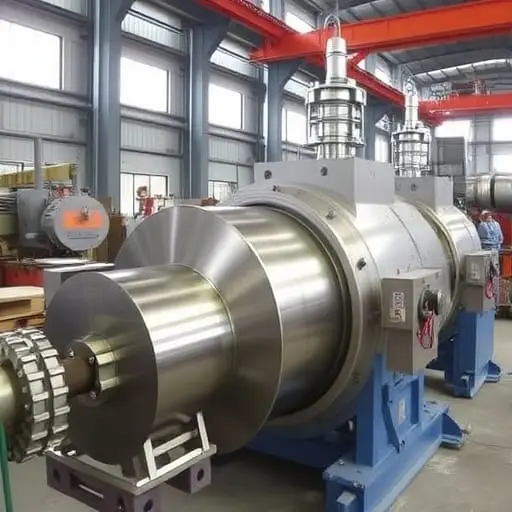
For applications where the burden depth is massive and the Tramp iron consists of heavy machinery parts (like bucket teeth or drill bits), the Eriez CP (Suspended Permanent) series remains an industry benchmark. Eriez has long been synonymous with magnetic separation.
From our experience, the CP Series excels in durability. These units are built like tanks, often outlasting the conveyors they are installed over. They utilize a specialized magnetic circuit designed to project the field deep into the material flow. While the capital expenditure is higher than the Oromineral, it is the preferred choice for extreme environments like iron ore mining where physical impact on the magnet is frequent.
4. Best for Deep Burdens: Dings Electro-Overhead
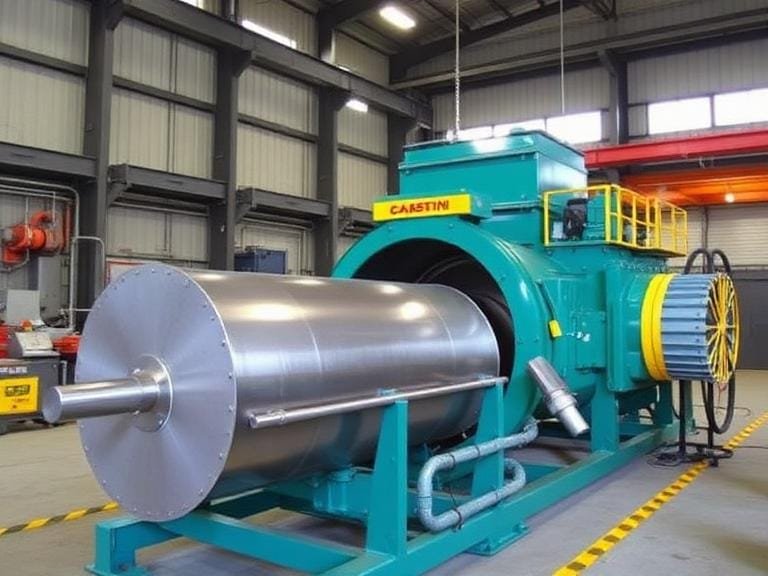
While permanent magnets (like the Oromineral and Eriez CP) are efficient, there is a physical limit to their reach. For deep burdens exceeding 300-400mm, we recommend an Electromagnet. Dings Magnetic Group produces some of the most robust oil-cooled electromagnets in the sector.
The Dings Electro-Overhead Conveyor Belt Magnetic Separator uses coils submerged in cooling oil to generate a massive, controllable magnetic field. The advantage here is the ability to turn the magnet off for maintenance or safety. However, users must be aware that these units consume significantly more power than the 1.1kw Oromineral unit and require rectifier panels to convert AC to DC power.
5. Best for Recycling: Master Magnets Overband
The recycling industry faces unique challenges: high volumes of low-density material (plastics, wood, shredded waste) mixed with ferrous contaminants. Master Magnets (a Bunting company) offers overband separators specifically tuned for the recycling sector.
These units often feature “Tri-Polar” magnetic designs which help to flip and agitate the ferrous metal as it is lifted. This agitation is crucial in recycling because it shakes loose any non-magnetic plastic or paper that might be trapped against the iron, ensuring a cleaner scrap product. If your goal is resale purity of scrap metal, this agitation feature is a critical differentiator.
6. Best Compact Solution: Kanetec Kyle Plate
Not every facility has the headroom for a suspended belt separator. For tight spaces, or where manual cleaning is acceptable due to low contamination levels, the Kanetec Plate Magnet is a solid solution. These are typically installed inside chutes or under the flow of material.
While not a “conveyor belt” separator in the self-cleaning sense, they are essential companions to conveyor systems. We recommend these for food processing or fine powder lines where the contamination consists of fine ferrous dust rather than large tramp iron. They are passive, require zero power, and offer high-intensity Gauss ratings at the face.
7. Technical Buying Guide: Electro vs. Permanent
One of the most frequent questions we field is whether to choose a Permanent Magnet (like the Oromineral ZT-1530P) or an Electromagnet. Here is our professional breakdown:
Permanent Magnets (Recommended for 80% of Users)
These use ferrite or rare earth blocks to create the field.
Pros:
1. Energy Efficiency: Power is only needed for the cleaning belt motor (e.g., 1.1kw).
2. Reliability: The magnetism never fails, even during a power outage.
3. Maintenance: No oil changes or rectifier maintenance required.
Cons: Cannot be “turned off” easily; depth of field is generally lower than massive electromagnets.
Electromagnets
These use copper/aluminum coils to generate a field.
Pros:
1. Deep Reach: Can pull iron through 500mm+ of burden.
2. Deactivation: Can drop the collected iron instantly by cutting power.
Cons: High energy cost, heavy, requires oil cooling systems.
8. Summary Comparison Table
Below is a direct comparison of the top choices to help you select the right Conveyor Belt Magnetic Separator for your facility.
| Model / Type | Technology | Power Consumption | Best Application | Lead Time |
|---|---|---|---|---|
| Oromineral ZT-1530P | Permanent Magnet | 1.1kw (Low) | Ceramics, Mining, General | ~25 Days |
| Eriez CP Series | Permanent Magnet | Motor Dependent | Heavy Aggregates | Variable |
| Dings Electro | Electromagnet | High (Coil + Motor) | Deep Mining Burdens | Long |
| Master Magnets | Permanent (Tri-Polar) | Motor Dependent | Recycling / MRF | Medium |
| Kanetec Plate | Passive Permanent | Zero | Food / Fine Powder | Short |
9. Frequently Asked Questions
What determines the size of the magnetic separator I need?
The size is determined by three factors: the width of your conveyor belt, the speed of the belt, and the depth of the material (burden). A faster belt or deeper burden requires a stronger, larger magnet to capture the iron before it passes the magnetic zone.
Why is the Oromineral ZT-1530P rated at only 1.1kw?
The 1.1kw rating refers to the motor that drives the self-cleaning belt. Because the magnetism is permanent (always on), no electricity is required to generate the magnetic field. This makes it extremely energy efficient compared to electromagnets.
How often does the belt need replacing?
The “armor-clad” belts on these separators typically last 1-3 years depending on the sharpness of the tramp iron being removed. We recommend inspecting the belt cleats monthly for tears.
Can I install these over the head pulley?
Yes. Installing a Conveyor Belt Magnetic Separator inline over the head pulley (Method 1) is often preferred to cross-belt installation (Method 2) because the material is already airborne and “loose” as it discharges, making it easier to extract the iron.