The Process of High Intensity Magnetic Separation: A Comprehensive Guide
The Process of High Intensity Magnetic Separation: A Comprehensive Guide
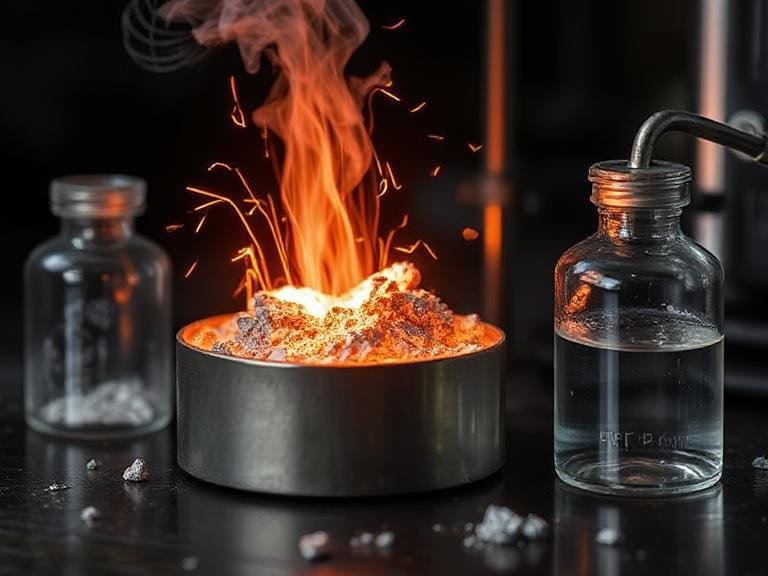
In the realm of mineral processing and industrial purification, the efficiency of separation technologies dictates the profitability and quality of the final product. Among these technologies, the process of high intensity magnetic separation (HIMS) stands out as a critical method for recovering weakly magnetic minerals that standard magnetic separators fail to capture. From purifying silica sand for glass manufacturing to concentrating hematite iron ore, HIMS technology is the backbone of modern mineral beneficiation.
This article delves deep into the mechanics, physics, and operational intricacies of high intensity magnetic separation. We will explore how this process differentiates itself from low-intensity methods, the specific machinery involved, and how innovations like the Oromineral Wet High Intensity Magnetic Separator are setting new standards in the industry.
- 1. Introduction to Magnetic Separation
- 2. The Science: Paramagnetism and Magnetic Susceptibility
- 3. Step-by-Step: The Process of High Intensity Magnetic Separation
- 4. Wet vs. Dry Magnetic Separation
- 5. Product Spotlight: Oromineral Wet High Intensity Magnetic Separator
- 6. Industrial Applications and Use Cases
- 7. Key Variables Affecting Separation Efficiency
- 8. Summary Comparison Table
- 9. Frequently Asked Questions (FAQs)
- 10. References
1. Introduction to Magnetic Separation
Magnetic separation is a physical separation process that segregates materials based on their response to a magnetic field. While simple magnets can easily pull ferromagnetic materials (like iron nails) from a mixture, the process of high intensity magnetic separation is designed for a much more challenging task: separating materials that are only weakly magnetic.
Standard low-intensity magnetic separators (LIMS) typically operate with field strengths around 1,000 to 2,000 Gauss. In contrast, High Intensity Magnetic Separators (HIMS) generate powerful fields ranging from 10,000 to 20,000 Gauss (1 to 2 Tesla). This immense power allows them to capture paramagnetic minerals that would otherwise flow right past a standard magnet.
2. The Science: Paramagnetism and Magnetic Susceptibility
To understand the process of high intensity magnetic separation, one must grasp the concept of magnetic susceptibility. This is a measure of how much a material will become magnetized in an applied magnetic field.
- Ferromagnetic: Materials like magnetite and metallic iron have very high susceptibility and are easily captured by low-intensity magnets.
- Paramagnetic: Minerals such as hematite, ilmenite, garnet, and chromite have positive but low magnetic susceptibility. They are attracted to magnetic fields but require the extreme force provided by HIMS to be separated.
- Diamagnetic: Minerals like quartz, feldspar, and calcite have negative or zero susceptibility and are repelled or unaffected by magnetic fields. These form the non-magnetic product in the separation process.
The core challenge in HIMS is generating a high magnetic gradient. A uniform magnetic field, no matter how strong, will only align particles; it will not pull them. To physically separate particles, the field must converge, creating a gradient that exerts a tractive force. This is achieved using a matrix.
3. Step-by-Step: The Process of High Intensity Magnetic Separation
The operational workflow of a High Intensity Magnetic Separator, particularly a wet system (WHIMS), involves several distinct stages. Below is a detailed breakdown of the cycle.
Step 1: Feed Preparation
The ore is first ground to a specific particle size to ensure liberation—meaning the valuable mineral is physically detached from the waste rock. For wet separation, this ground ore is mixed with water to create a slurry. The density of this slurry is critical; if it is too thick, particles cannot move freely; if too thin, the throughput is reduced.
Step 2: Introduction to the Magnetic Matrix
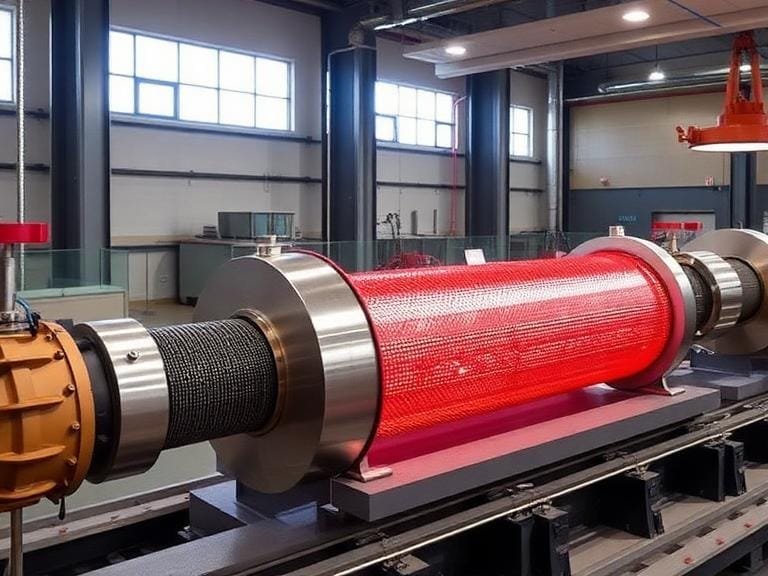
The slurry is fed into the separator, usually through a gravity feed or pressurized system. The heart of the machine is the matrix. The matrix consists of magnetically susceptible material, such as steel wool, expanded metal, or grooved plates, placed between two powerful electromagnetic coils.
When the electromagnet is energized, the matrix induces a very high magnetic gradient at its sharp edges. As the slurry passes through the matrix, the high-intensity field traps the paramagnetic particles (the “mags”) onto the surface of the matrix.
Step 3: The Washing Phase
While the magnetic particles are held firmly by the matrix, the non-magnetic particles (diamagnetic materials like silica) flow through the gaps unhindered. To ensure high purity, a low-pressure water rinse is often applied while the matrix is still in the magnetic zone. This washes away any physically entrapped non-magnetic particles, ensuring that only the target mineral remains.
Step 4: Flushing and Collection
Once the non-magnetics have been collected in the “tailings” launder, the matrix moves out of the magnetic field (in carousel-type machines) or the electromagnet is de-energized (in cyclic machines). With the magnetic force removed, the paramagnetic particles lose their attraction. High-pressure water jets then flush the matrix, washing the magnetic concentrate into a separate collection launder.
4. Wet vs. Dry Magnetic Separation
The process of high intensity magnetic separation can be conducted in either a wet or dry environment, depending on the material characteristics.
Wet High Intensity Magnetic Separation (WHIMS)
WHIMS is preferred for fine particles (typically below 75 microns). Water helps to disperse the particles, breaking up aggregates and cleaning the surface of the minerals. It is essential for processing clay, glass sand, and fine iron ores.
Dry High Intensity Magnetic Separation
Dry separation typically uses rare-earth rolls or induced roll separators. It requires the feed to be completely dry and free-flowing. It is generally more effective for coarser particle sizes (above 75 microns) where surface moisture would cause particles to clump together, ruining separation efficiency.
5. Product Spotlight: Oromineral Wet High Intensity Magnetic Separator
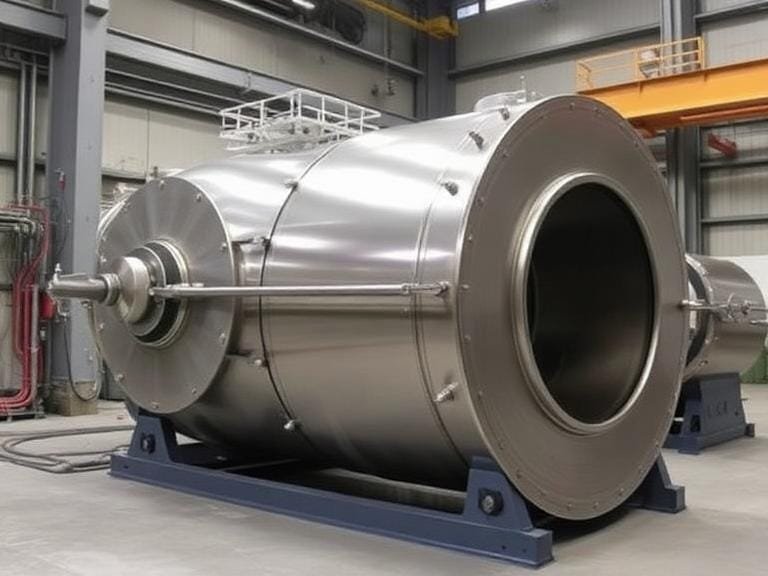
For operations requiring top-tier efficiency in wet separation, the Oromineral Wet High Intensity Magnetic Separator (Model WHIMS-002) represents the pinnacle of modern engineering. Designed by ORO Mineral, this unit is engineered to tackle the most difficult separation tasks with precision and durability.
Key Features
- High-Intensity Magnetic Field: Generates up to 2.0 Tesla, providing maximum separation efficiency for even the most weakly magnetic particles.
- Durable Construction: The main structure utilizes Stainless Steel 304/316 and corrosion-resistant materials, essential for withstanding abrasive slurries and harsh mining environments.
- Adjustable Magnetic Field Strength: Allows operators to customize the gauss level to meet specific processing requirements, from roughing to cleaning stages.
- Compact Design: Engineered to optimize space utilization in your processing plant, measuring approximately 2000mm x 1500mm x 1800mm.
- Easy Maintenance: Designed for quick part replacement, minimizing downtime.
Technical Specifications
| Specification | Details |
|---|---|
| Brand | ORO Mineral |
| Model | WHIMS-002 |
| Magnetic Field Strength | Up to 2.0 Tesla (customizable) |
| Feed Particle Size | ≤ 3mm (dependent on model) |
| Capacity | 1-50 t/h (dependent on model) |
| Power Consumption | 5-50 kW (dependent on model) |
| Operating Temperature | 0-60°C |
| Weight | Varies by model (e.g., 5000 kg) |
| Certifications | ISO 9001:2015, CE, ATEX (optional) |
Whether you are processing hematite or purifying silica sand, the Oromineral WHIMS-002 offers a robust solution with optional PLC-based automation for seamless integration into smart factories.
6. Industrial Applications and Use Cases
The process of high intensity magnetic separation is utilized across various industries:
- Iron Ore Beneficiation: Upgrading hematite and goethite ores where traditional low-intensity drums fail.
- Glass and Ceramic Industry: Removal of iron impurities from silica sand, feldspar, and nepheline syenite to ensure the transparency and whiteness of the final product.
- Mineral Sands: Separating ilmenite (source of titanium) and garnet from non-magnetic beach sands.
- Rare Earth Elements: Concentration of monazite and other rare earth minerals.
- Recycling: Recovery of stainless steel from shredded waste streams.
7. Key Variables Affecting Separation Efficiency
To optimize the process of high intensity magnetic separation, operators must control several variables:
- Field Strength: Higher tesla allows for the capture of weaker paramagnetic particles but increases power consumption.
- Matrix Type: The geometry of the matrix determines the gradient. Finer matrices (like steel wool) create higher gradients but block easier; coarser matrices (grooved plates) handle higher flow rates but have lower capture strength.
- Flow Velocity: If the slurry moves too fast, the fluid drag force may overcome the magnetic attraction, causing loss of valuable product.
- Pulp Density: The ratio of solids to water affects viscosity. High viscosity hinders particle movement toward the magnetic matrix.
8. Summary Comparison Table
The following table contrasts Low Intensity (LIMS) vs. High Intensity (HIMS) separation.
| Feature | Low Intensity (LIMS) | High Intensity (HIMS) |
|---|---|---|
| Magnetic Field Strength | 1,000 – 2,000 Gauss | 10,000 – 20,000 Gauss (1-2 Tesla) |
| Target Minerals | Ferromagnetic (Magnetite, Iron) | Paramagnetic (Hematite, Ilmenite, Garnet) |
| Primary Mechanism | Permanent Magnets or Simple Electromagnets | Electromagnetic Coils with Inductive Matrix |
| Energy Consumption | Low | High (due to electromagnetic coils) |
| Cost | Low | High |
9. Frequently Asked Questions (FAQs)
10. References
1. Svoboda, J. (2004). Magnetic Techniques for the Treatment of Materials. Kluwer Academic Publishers.
2. Wills, B.A., & Finch, J.A. (2016). Wills’ Mineral Processing Technology. Butterworth-Heinemann.