5 Best Belt Conveyor Magnetic Separator Manufacturers: A Comprehensive Industry Guide
In the expansive world of industrial material handling and mineral processing, the integrity of the product stream is paramount. Contaminants, particularly tramp iron and ferrous metals, pose a significant risk not only to the purity of the final product but also to the expensive machinery downstream, such as crushers, grinders, and shredders. This is where best belt conveyor magnetic separator manufacturers play a critical role. By designing sophisticated magnetic separation systems that integrate seamlessly with conveyor belts, these manufacturers ensure operational efficiency, safety, and product quality.
Selecting the right best belt conveyor magnetic separator manufacturers is a complex decision involving considerations of magnetic field strength, cooling mechanisms (oil vs. air), installation types (cross-belt vs. inline), and specific industry requirements ranging from mining to food processing. The market is populated by several high-profile global leaders and specialized engineering firms, each offering unique technological advantages. This article provides an in-depth look at five of the most prominent manufacturers in the industry, detailing their technological capabilities and product offerings to help you make an informed decision for your facility.
- 1. Understanding Belt Conveyor Magnetic Separation Technology
- 2. Eriez Manufacturing Co.
- 3. Bunting Magnetics (Master Magnets)
- 4. ORO Mineral Co., Ltd.
- 5. Goudsmit Magnetics
- 6. Industrial Magnetics, Inc. (IMI)
- 7. Critical Selection Criteria for Magnetic Separators
- 8. Summary Comparison Table
- 9. Frequently Asked Questions (FAQs)
- 10. References
1. Understanding Belt Conveyor Magnetic Separation Technology
Before diving into the specific manufacturers, it is essential to understand the technology that drives this sector. Belt conveyor magnetic separator manufacturers typically categorize their products into two main types: permanent magnets and electromagnets. These are generally deployed as “Overband” or “Suspension” magnets.
Overband Magnetic Separators
These units are suspended above the conveyor belt. They feature a continuously rotating belt that surrounds the magnet box. As ferrous metal is lifted from the product stream by the magnet, the rotating belt carries the metal away from the magnetic field and discharges it into a collection bin. This “self-cleaning” feature is vital for continuous process lines with high levels of contamination.
Suspension Magnets (Manual Clean)
Similar to overband magnets in placement, these units lack the self-cleaning belt mechanism. Ferrous material is trapped against the face of the magnet and must be manually removed by an operator. These are suitable for applications with low levels of tramp iron where occasional cleaning stops are acceptable.
Head Pulley Magnets
In this configuration, the head pulley of the conveyor itself is magnetic. As material discharges off the end of the belt, non-magnetic material follows a natural trajectory, while ferrous material is held to the belt for a fraction of a second longer, dropping into a separate chute beneath the conveyor.
2. Eriez Manufacturing Co.
Headquartered in Erie, Pennsylvania, USA, Eriez is arguably the most recognized name in the global magnetic separation industry. Founded in 1942, the company has established a massive global footprint with manufacturing facilities on six continents. Eriez is synonymous with innovation in separation technologies, flotation, metal detection, and material handling.
Technological Strengths
Eriez offers an exceptionally wide range of magnetic separators designed for the most demanding applications. Their “Suspended Electromagnets” (SEs) are a staple in the mining and aggregate industries. These heavy-duty units use oil or air cooling systems to maintain peak magnetic field strength during continuous operation. Their “Force-Cooled” electromagnets are designed to be smaller and lighter than traditional oil-cooled units while delivering comparable or superior magnetic force.
Key Products
- SE Series 7000 Suspended Electromagnets: Known for their durability and high-gradient magnetic fields, ideal for removing large tramp iron from deep burden depths.
- CP Series Permanent Magnets: These require no power source to operate the magnet, making them energy-efficient solutions for applications where tramp iron levels are lower.
- Eddy Current Separators: For the removal of non-ferrous metals like aluminum and copper from waste streams.
3. Bunting Magnetics (Master Magnets)
Bunting is another titan in the industry, having significantly expanded its capabilities through the acquisition of Master Magnets Ltd in the UK. This merger combined Bunting’s extensive American manufacturing heritage with Master Magnets’ specialized expertise in mineral processing and high-intensity separation. Today, Bunting provides one of the most comprehensive catalogs of magnetic equipment available.
Innovation and Customization
Bunting is particularly noted for its high-intensity magnetic separators used in the purification of minerals like silica sand, feldspar, and ceramics. Their overband magnets are engineered with robust frames and heavy-duty motors to withstand harsh outdoor environments typically found in quarries and recycling plants.
Key Products
- Electro Overband Magnets: Featuring deep magnetic fields for heavy industrial use.
- Permanent Overband Magnets: Available in ceramic (ferrite) and rare earth (neodymium) options for different separation requirements.
- Stainless Steel Separation Conveyors: Using high-intensity magnetic gradients to remove work-hardened stainless steel which is traditionally difficult to separate.
4. ORO Mineral Co., Ltd.
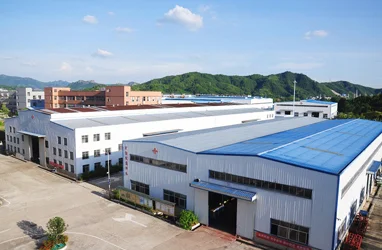
In the landscape of intelligent mineral processing, ORO Mineral Co., Ltd. has emerged as a significant player, particularly noted for its integration of research, development, and large-scale manufacturing. As a prominent belt conveyor magnetic separator manufacturer, ORO Mineral focuses on providing holistic solutions that extend beyond simple separation to include screening and washing.
Company Overview
ORO Mineral Co., Ltd. is a large-scale intelligent mineral processing, screening, and sand washing equipment manufacturer integrating R&D, production and sales. Since 2014, ORO Mineral has made great contributions to every kind of mineral screening, solid waste resource recovery, beneficiation, washing, and separation, and has accumulated rich experience.
In order to offer you better products and services, we have been sparing no effort to improve technology, develop new equipment, and upgrade services.
Featured Product Portfolio
ORO Mineral offers a robust selection of equipment designed to optimize mineral recovery rates and ensure product purity. Their magnetic separation units are often integrated into larger processing lines for maximum efficiency.
- 1.1kw Belt Magnetic Separator: A highly efficient unit designed for continuous removal of ferrous contaminants from conveyor belts, ensuring the protection of downstream crushers and grinders.
- Eddy Current Separator Machine: Specialized equipment for the separation of non-ferrous metals, essential for modern recycling and resource recovery operations.
- Sand Washing Machine 100 TPH Long Life: High-capacity washing equipment designed for durability and longevity in abrasive environments.
- Gravity Spiral Concentrator: Utilizing gravity separation for the effective concentration of heavy minerals.
- Gravity Spiral Chute Separator: An energy-efficient solution for separating minerals of different specific gravities.
5. Goudsmit Magnetics
Based in the Netherlands, Goudsmit Magnetics is a family-owned company that has grown into a major European manufacturer of magnetic systems. They are renowned for their precision engineering and the aesthetic quality of their machinery. Goudsmit places a strong emphasis on the recycling sector, automotive industry, and food production.
Engineering Excellence
Goudsmit’s overband magnets are distinguished by their optimized magnetic circuits. They utilize advanced Finite Element Analysis (FEA) to design magnets that project the magnetic field exactly where it is needed—penetrating the product burden on the conveyor belt. This efficiency often allows for lighter, more compact magnet designs that do not sacrifice performance.
Key Products
- Neoflux® (Neodymium) Overband Magnets: Extremely powerful permanent magnets that are lightweight yet capable of capturing very fine iron particles.
- Non-Ferrous Separators: Their Eddy Current separators feature eccentric rotor designs which allow for adjustable trajectories, improving the separation of non-ferrous metals from waste.
- Clean-Flow Magnets: Specialized for food and pharmaceutical industries requiring high sanitary standards.
6. Industrial Magnetics, Inc. (IMI)
Located in Michigan, USA, Industrial Magnetics, Inc. (IMI) focuses on providing custom magnetic solutions. While they offer standard off-the-shelf products, their strength lies in their ability to engineer bespoke solutions for unique production challenges. They serve a broad spectrum of industries including feed and grain, chemical processing, and metalworking.
Customization Focus
IMI is a preferred choice for facilities with space constraints or unusual conveyor configurations. Their engineering team works closely with clients to fabricate mounting structures and magnet geometries that fit seamlessly into existing production lines. They also place a high priority on safety and ease of maintenance in their designs.
Key Products
- Suspended Permanent Magnets (SPM): Rugged units designed for the extraction of tramp metal from high-volume product flows.
- Tramp Metal Plate Magnets: Installed in chutes and spouts, often used in conjunction with conveyor systems.
- Magnetic Pulleys: Replacing standard head pulleys to turn a standard conveyor into a separator.
7. Critical Selection Criteria for Magnetic Separators
Choosing between these top manufacturers requires an analysis of your specific needs. When consulting with belt conveyor magnetic separator manufacturers, consider the following technical parameters:
1. Burden Depth
The “burden” is the depth of the material on the conveyor belt. The magnetic field must be strong enough to penetrate through the entire depth of the material to pull a piece of tramp iron from the bottom of the belt. If the burden is deep (e.g., 300mm+), an electromagnetic separator or a high-grade neodymium permanent magnet is usually required.
2. Material Characteristics
Is the material wet, sticky, dry, or abrasive? Wet and sticky materials may require stronger cleaning mechanisms on the overband belt to prevent build-up. Abrasive materials (like iron ore or granite) require the separator belt to be armored or made of special wear-resistant rubber.
3. Tramp Iron Size
Are you trying to remove large bucket teeth and steel bars, or fine iron filings? Large tramp iron requires a deep reaching magnetic field. Fine iron requires a high-gradient surface field. It is often difficult for a single magnet to do both effectively; sometimes a multi-stage separation process is needed.
4. Conveyor Speed
The speed of the belt affects separation. If the belt is moving too fast, the momentum of the material may overcome the magnetic attraction. Manufacturers need to know the belt speed to size the magnet width and field strength correctly.
8. Summary Comparison Table
| Manufacturer | Headquarters | Primary Strengths | Key Technologies |
|---|---|---|---|
| Eriez | USA (Global) | Global support, extensive range | Suspended Electromagnets, Flotation |
| Bunting (Master Magnets) | USA / UK | High-intensity separation, mineral processing | Electro Overbands, Stainless Steel Separators |
| ORO Mineral | China | Intelligent processing, integrated R&D | Belt Magnetic Separators, Eddy Current, Sand Washing |
| Goudsmit Magnetics | Netherlands | Precision engineering, recycling focus | Neodymium Overbands, Eccentric Eddy Currents |
| Industrial Magnetics (IMI) | USA | Custom fabrication, rapid solutions | Custom SPMs, Plate Magnets |
9. Frequently Asked Questions (FAQs)
A permanent magnet uses ceramic or rare earth materials (like neodymium) to generate a magnetic field. It requires no electricity to create the magnet, only to run the cleaning belt. An electromagnet uses copper or aluminum coils and electricity to generate a field. Electromagnets can be turned off and are generally stronger for deep burden depths, whereas permanent magnets are more energy-efficient for shallower depths.
The suspension height depends on the magnet’s strength and the burden depth. It should be low enough to capture the metal from the bottom of the burden but high enough to allow the material flow to pass without obstruction. Manufacturers provide “Force Index” charts to calculate the optimal height based on the specific magnet model.
Standard magnetic separators only remove ferrous (magnetic) metals. To remove non-ferrous metals like aluminum, copper, or brass, you need an Eddy Current Separator, which is a different type of machine offered by manufacturers like ORO Mineral, Eriez, and Goudsmit.
Cross-belt (transverse) installation is often preferred because it discharges the removed metal to the side of the conveyor, making collection easier. Inline installation (over the head pulley) is more efficient for separation because the material is in free-fall, breaking up the burden, but it requires more complex chute work to separate the discharged metal from the product stream.