The Comprehensive Guide: Magnetic Separator Machine Working Principle
In the vast world of industrial processing, the ability to isolate specific materials from complex mixtures is the backbone of efficiency. Central to this is the magnetic separator machine working principle. Whether it is refining high-grade ores in a remote mining operation or ensuring the purity of a batch of pharmaceutical powder, magnetic separation is the silent workhorse of modern manufacturing. In this detailed exploration, we will dive into the physics, mechanics, and industrial applications that define how these machines operate in 2026.
Table of Contents
- What is a Magnetic Separator?
- Deep Dive: The Magnetic Separator Machine Working Principle
- Oromineral Magnetic Separator Machine: Precision Engineering
- Types of Magnetic Separators and Their Functions
- The Physics of Magnetic Force vs. Competitive Forces
- Industrial Applications: Beyond the Mining Pit
- Technical Summary Table
- Frequently Asked Questions (FAQs)
- Technical References
What is a Magnetic Separator?
At its core, a magnetic separator is a piece of equipment used to separate various materials using the physical properties of magnetism. The magnetic separator machine working principle relies on the fact that different materials respond differently when placed within a magnetic field. Some are strongly attracted (ferromagnetic), some are weakly attracted (paramagnetic), and others are repelled or unaffected (diamagnetic). By leveraging these differences, industries can purify products, recover valuable minerals, and protect downstream equipment from damage caused by tramp iron.
Deep Dive: The Magnetic Separator Machine Working Principle
Understanding the magnetic separator machine working principle requires a look at the interplay between magnetic force and gravity. When a mixture of magnetic and non-magnetic particles enters a magnetic field, the magnetic particles are subjected to a force that pulls them toward the source of the magnetism—usually a permanent magnet or an electromagnet.
The Separation Zone
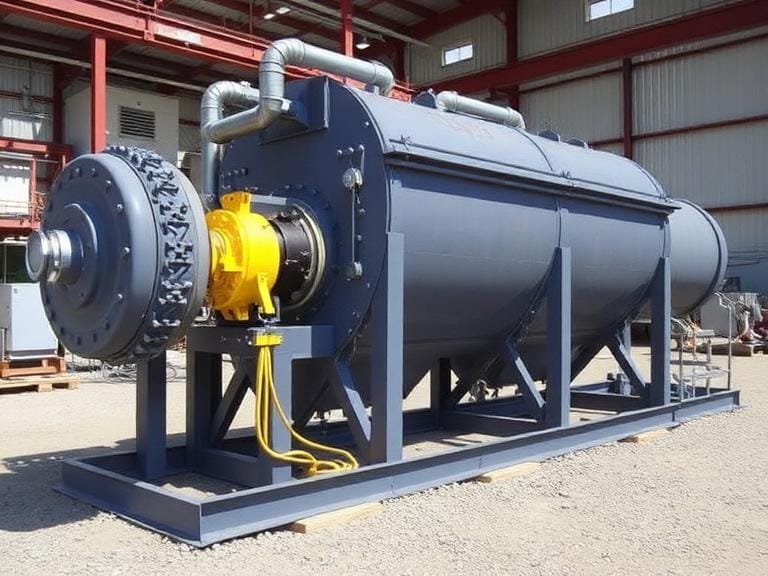
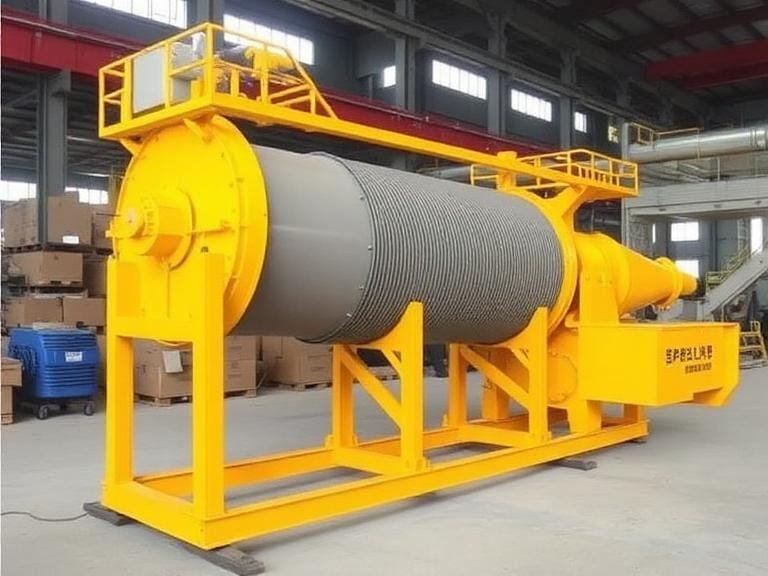
As the material (either in dry powder form or as a wet slurry) moves through the machine, it enters the “separation zone.” In a typical drum-style separator, a rotating outer shell moves over a stationary internal magnetic assembly. The magnetic particles are captured against the shell by the internal magnets and carried to a discharge point. Meanwhile, the non-magnetic particles, unaffected by the magnetic field, fall away under the influence of gravity or centrifugal force. This fundamental magnetic separator machine working principle ensures a continuous, automated flow of clean material.
Force Competition
The success of the magnetic separator machine working principle depends on the magnetic force being stronger than the sum of all “competing forces.” These competing forces include gravity, fluid drag (in wet systems), and inertia. If the magnetic field is too weak, valuable magnetic material will be lost. If it is too strong or improperly calibrated, it may capture non-magnetic debris trapped within the magnetic clusters, reducing the purity of the final product.
Product Spotlight: Oromineral Magnetic Separator Machine
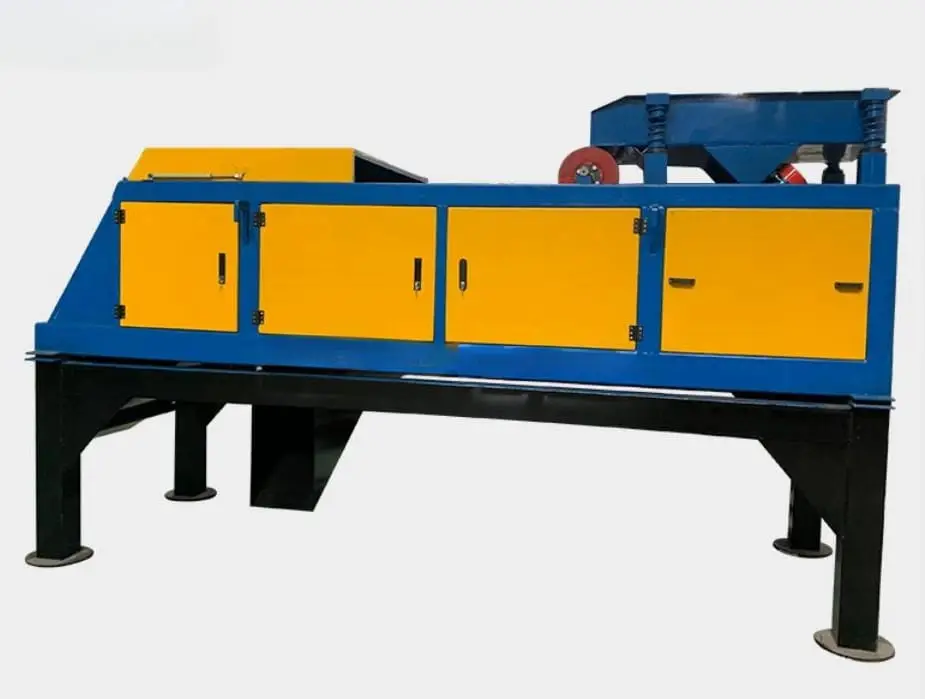
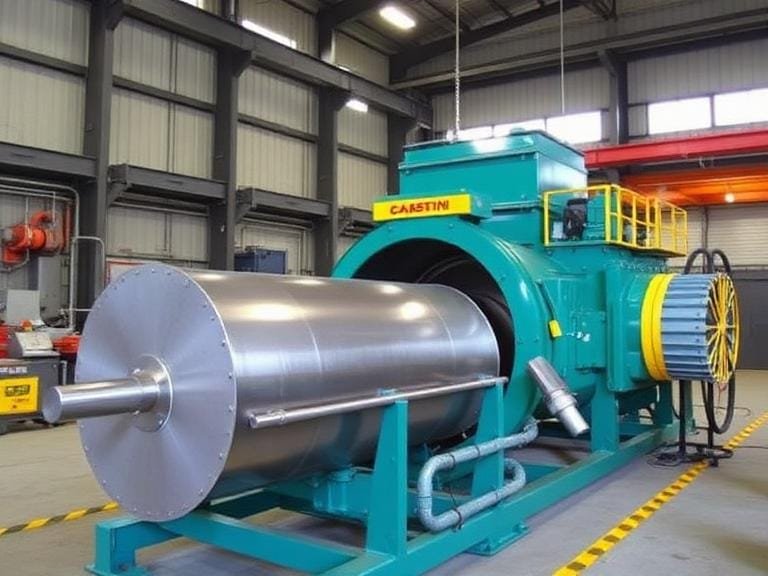
When looking for a high-performance solution that exemplifies the magnetic separator machine working principle, the ORO Mineral ORO003 stands out. Oromineral Magnetic Separator Machine is designed for maximum recovery and longevity in the toughest environments.
Product Specifications:
| Parameter | Details |
|---|---|
| Brand | ORO Mineral |
| Model | ORO003 |
| Magnetic Field Strength | 5000-15000 Gauss |
| Capacity | 5-100 TPH |
| Feed Size | ≤ 300 mm |
| Material of Construction | Stainless Steel / Carbon Steel |
| Power Consumption | 5.5-160 kW |
| Dimensions (mm) | 2500 x 1500 x 2000 mm |
| Weight | 5000-20000 kg |
| Operating Mode | Automatic / Manual |
| Customizable Options | Belt Conveyor, Vibrating Feeder, etc. |
Key Features:
- High Separation Efficiency: Utilizes powerful magnetic fields to ensure effective separation of magnetic particles.
- Durability: Constructed with high-quality materials to withstand heavy-duty applications and harsh environments.
- Adjustability: Customizable magnetic field strength and operational settings to suit various applications.
- Easy Maintenance: Designed for easy access and maintenance, reducing downtime and operational costs.
- Compact Design: Space-saving design suitable for various plant layouts and configurations.
Why Choose ORO Mineral’s Magnetic Separator Machine? With over a decade of experience, ORO Mineral combines innovative technology with stringent quality assurance. Their comprehensive customer support ensures that your magnetic separator machine working principle is always optimized for your specific ore or waste stream.
Types of Magnetic Separators and Their Functions
While the basic magnetic separator machine working principle remains constant, the mechanical delivery systems vary significantly to accommodate different material types.
1. Magnetic Drum Separators
These are the most common in the mining industry. The drum rotates, carrying material over a stationary magnetic arc. They are excellent for continuous self-cleaning operations.
2. Overbelt Magnetic Separators
Often seen in recycling and quarrying, these magnets hang over a conveyor belt. They pull metal upwards out of the moving stream of material. This variation of the magnetic separator machine working principle is specifically designed to remove “tramp iron” that could damage crushers or grinders.
3. High-Gradient Magnetic Separators (HGMS)
Used for very fine particles or weakly magnetic minerals, HGMS machines use a matrix of steel wool or expanded metal to create localized areas of extremely high magnetic gradient. This allows for the capture of particles that would escape a standard drum separator.
The Physics of Magnetic Force vs. Competitive Forces
To truly master the magnetic separator machine working principle, one must understand the equation of magnetic force:
$$F_m = (m \cdot \chi \cdot H) \cdot \frac{dH}{dx}$$
Where $F_m$ is the magnetic force, $m$ is the mass, $\chi$ (chi) is the magnetic susceptibility, $H$ is the magnetic field intensity, and $dH/dx$ is the magnetic field gradient. This formula illustrates that it isn’t just the strength of the magnet (Gauss) that matters, but the gradient—how quickly the field strength changes over distance. A high-gradient field is essential for pulling small, weakly magnetic particles out of a fast-moving stream.
Industrial Applications: Beyond the Mining Pit
The magnetic separator machine working principle is applied across a staggering array of industries. Each sector utilizes the technology to solve unique purity or recovery challenges.
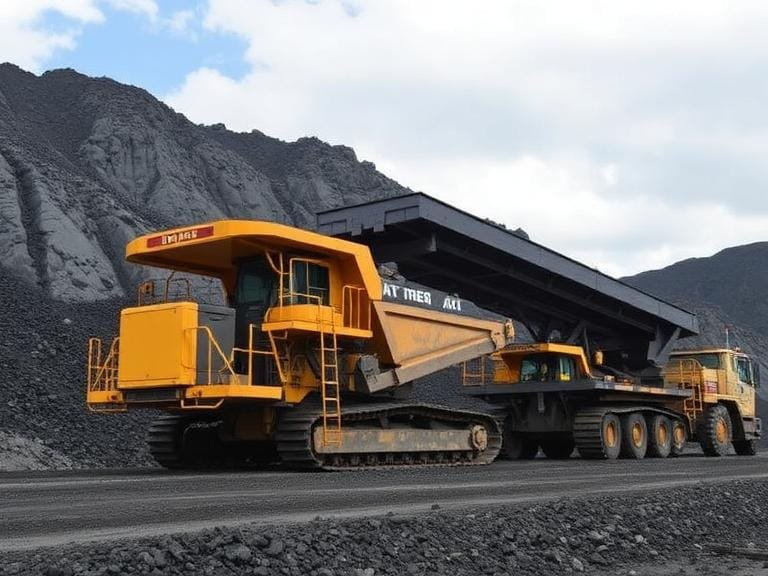
- Mining Industry: Separating magnetic ores like magnetite or hematite from non-magnetic gangue minerals. This reduces the volume of material that needs to be processed in downstream smelters.
- Recycling Industry: Recovering steel and iron from shredded automobiles or municipal waste. The magnetic separator machine working principle is vital for the circular economy.
- Ceramic Industry: Removing microscopic iron impurities from kaolin clay and other raw materials to prevent dark spots on finished porcelain.
- Chemical Industry: Separating magnetic catalysts from chemical residues to allow for catalyst reuse and product purification.
- Food Processing: Ensuring that no metal fragments from machinery end up in food products. This is a critical safety application of the magnetic separator machine working principle.
Technical Summary Table
| Feature | Low Intensity (LIMS) | High Intensity (HIMS) | High Gradient (HGMS) |
|---|---|---|---|
| Magnetic Strength | Up to 2000 Gauss | Up to 20,000 Gauss | Variable (Matrix based) |
| Common Material | Magnetite, Tramp Iron | Hematite, Wolframite | Fine Paramagnetic minerals |
| Application Style | Drum / Overbelt | Roll / Disc | Carousel / Matrix |
| Feed State | Wet or Dry | Primarily Dry | Primarily Wet |
Frequently Asked Questions (FAQs)
What is the difference between Gauss and Gradient?
Gauss refers to the magnetic flux density (the “strength” at a point), while Gradient refers to the rate of change of that strength over distance. The magnetic separator machine working principle relies more on a high gradient to actually “pull” a particle toward the magnet.
Can a magnetic separator remove stainless steel?
Most common stainless steels (like 304 or 316) are non-magnetic or only slightly paramagnetic. Standard magnetic separators struggle with them. Specialized “Eddy Current” separators or extremely high-intensity magnetic filters are required for these materials.
Does temperature affect the working principle?
Yes. Permanent magnets can lose their strength if they exceed their “Curie temperature.” In high-heat industrial processes, the magnetic separator machine working principle might require specialized heat-resistant magnets or electromagnetic cooling systems.
Why is wet separation sometimes preferred over dry?
Wet separation is used for very fine particles (less than 75 microns). In dry separation, fine particles tend to clump together due to electrostatic forces or moisture, which hinders the magnetic separator machine working principle. Water acts as a carrier that keeps particles individual and free-flowing.
Technical References
- Wills, B. A., & Finch, J. (2025). Wills’ Mineral Processing Technology: An Introduction to the Practical Aspects of Ore Treatment and Mineral Recovery.
- Svoboda, J. (2024). Magnetic Techniques for the Treatment of Materials. Kluwer Academic Publishers.