How to separate magnetic separation?
The process of magnetic separation plays a critical role in mineral processing, solid waste recycling, ceramics refinement, and purification of industrial raw materials. Whether you are working with kaolin, quartz, feldspar, metal ores, or iron-removal systems in production lines, understanding how to separate using magnetic separation is essential.
This article also includes a professional spotlight on one of the industry’s most advanced providers—ORO Mineral Co., Ltd.—a leader in intelligent mineral screening, beneficiation, washing, and magnetic separation equipment.
Table of Contents
- What Is Magnetic Separation?
- How Magnetic Separation Works
- Types of Magnetic Separation Methods
- How to Separate Using Magnetic Separation (Step-by-Step)
- Applications of Magnetic Separation
- Key Equipment Used in Magnetic Separation
- Company & Product Spotlight: ORO Mineral Co., Ltd.
- Comparison Table of Magnetic Separation Methods
- How to Choose the Right Magnetic Separator
- Frequently Asked Questions
- References
What Is Magnetic Separation?
Magnetic separation is an industrial technique used to remove magnetic materials from non-magnetic mixtures. The process involves applying a magnetic field to attract and extract ferromagnetic or paramagnetic particles from a bulk material stream.
Industries that rely heavily on magnetic separation include:
- Mining and mineral processing
- Ceramics (e.g., kaolin, quartz, feldspar)
- Recycling and waste management
- Food processing
- Chemical production
- Metal purification
The ability to separate magnetic separation efficiently improves production quality, removes contaminants, and enhances material purity.
How Magnetic Separation Works
The principle behind magnetic separation is simple:
- Magnetic particles respond to a magnetic field and move toward the magnet.
- Non-magnetic particles remain unaffected and move in the opposite direction.
This creates a natural division between magnetic and non-magnetic materials, enabling precise separation in both dry and wet processing environments.
Key Scientific Principles
- Magnetic permeability: Determines how easily a particle responds to a magnetic field.
- Magnetic susceptibility: The degree to which a material becomes magnetized.
- Magnetic force vs gravitational force: Determines the quality of separation.
Types of Magnetic Separation Methods
1. Dry Magnetic Separation
Used for coarse materials like iron ore, construction waste, and metal scraps. Ideal when humidity is low.
2. Wet Magnetic Separation
Used for fine minerals such as kaolin, feldspar, and quartz—where particle purity matters. Often applied in slurry-based processing lines.
3. High-Intensity Magnetic Separation
Used to extract weakly magnetic minerals, requiring powerful magnetic fields.
4. Low-Intensity Magnetic Separation
Common for separating ferromagnetic materials like magnetite.
5. Induced Magnetic Roll (IMR) Separation
Designed for fine particle materials requiring precise separation.
6. Overband Magnetic Separation
Common in recycling and material handling industries; removes ferrous contaminants from conveyor belts.
How to Separate Using Magnetic Separation (Step-by-Step Guide)
To understand how to separate magnetic separation in a practical environment, follow this structured process:
Step 1: Material Preparation
Materials must be crushed, screened, or turned into slurry depending on the application.
Step 2: Feeding Into the Separator
Material enters the separator via hopper, chute, conveyor, or slurry pipeline.
Step 3: Exposure to Magnetic Field
Magnetic particles are attracted toward the magnetic drum, roll, or plate.
Step 4: Separation of Magnetic and Non-Magnetic Fractions
Magnetic materials are collected separately, while non-magnetic materials are discharged.
Step 5: Product Discharge and Collection
The separated materials are gathered into different output bins or processing lines.
Step 6: Quality Evaluation
Purity levels are checked, especially in high-demand industries like ceramics and metallurgy.
Applications of Magnetic Separation
1. Mineral Beneficiation
Used to remove iron impurities, improve ore grade, and increase mineral purity.
2. Kaolin, Quartz, & Feldspar Processing
Essential for whitening, brightening, and refining raw minerals used in ceramics and electronics.
3. Solid Waste Recycling
Separates ferrous metals from plastics, glass, and other waste materials.
4. Food Industry Purification
Used to eliminate metallic contamination for food safety compliance.
5. Metallurgical Processing
Helps recover valuable metals and remove unwanted magnetic contaminants.
Key Equipment Used in Magnetic Separation
1. Magnetic Drum Separators
Ideal for large-scale iron removal in mining and recycling.
2. Magnetic Roll Separators
Used for fine mineral refinement and high purity separation.
3. Plate Magnets
Common in food processing and manufacturing lines.
4. Wet High-Intensity Magnetic Separators (WHIMS)
Frequently used in ceramic material purification.
5. Permanent Magnetic Separators
Energy-saving, durable, and widely used across industries.
6. Water-Cooling Electro-Magnetic Separators
Especially effective for kaolin, quartz, and feldspar with consistent temperature stability.
Company & Product Spotlight: ORO Mineral Co., Ltd.
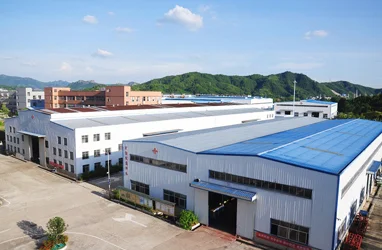
ORO Mineral Co., Ltd. is a large-scale intelligent mineral processing, screening, and sand-washing equipment manufacturer integrating R&D, production, and sales.
Since 2014, ORO Mineral has contributed significantly to mineral screening, solid waste recovery, beneficiation, washing, and magnetic separation—accumulating rich global experience.
Featured Products:
- Magnetic Separation Equipment
- Permanent Magnetic Separator
- Water-Cooling Electro-Magnetic Separator for kaolin, feldspar, quartz
ORO Mineral is known for:
- High-performance separation efficiency
- Customizable mineral processing solutions
- Stable, intelligent control systems
- Support for high-purity industrial production
Comparison Table: Magnetic Separation Methods
| Method | Intensity | Main Application | Material Type | Efficiency |
|---|---|---|---|---|
| Dry Magnetic Separation | Low–Medium | Metal scrap, coarse minerals | Dry materials | ★★★☆☆ |
| Wet Magnetic Separation | Medium–High | Kaolin, feldspar, quartz | Slurry/fine minerals | ★★★★★ |
| High-Intensity Magnetic Separation | High | Weakly magnetic minerals | Fine materials | ★★★★☆ |
| Overband Magnetic Filters | Medium | Recycling, metal removal | Bulk conveyor material | ★★★☆☆ |
How to Choose the Right Magnetic Separator
1. Identify Material Characteristics
Particle size, moisture, and magnetic susceptibility determine the best separator type.
2. Purity Requirements
High-purity ceramics require high-intensity wet separation.
3. Throughput Needs
Choose scalable systems for large mining operations.
4. Temperature Stability
Water-cooled systems offer stable performance in long-duration processing.
5. Energy Efficiency
Permanent magnets reduce operational costs significantly.
Frequently Asked Questions
1. What materials can magnetic separation process?
It can process iron ore, manganese, quartz, kaolin, feldspar, recycled metals, and more.
2. Is magnetic separation environmentally friendly?
Yes—it reduces chemical usage and minimizes waste.
3. Which industries benefit most?
Mining, ceramics, food processing, recycling, and metallurgy.
4. How do I separate magnetic separation efficiently?
Select the correct separator type, optimize magnetic field strength, and ensure material uniformity.
5. Are high-intensity separators expensive?
They cost more upfront but deliver superior purity and long-term efficiency.